


 New Cars
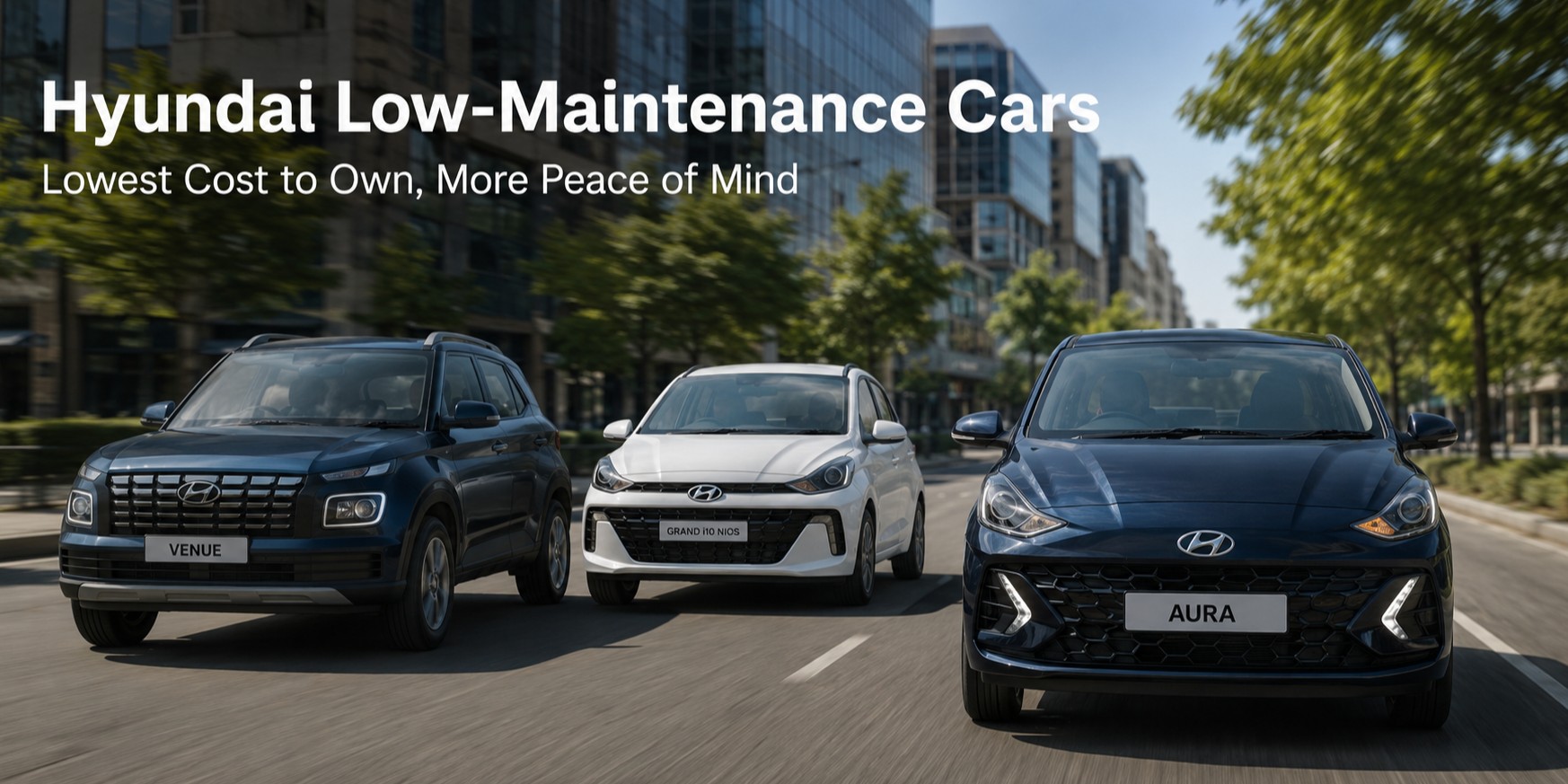
Hyundai Low-Maintenance Cars in India: Models With Lowest Ownership Cost
Discover the best low-maintenance Hyundai cars in India. Compare service costs, engine types, spare parts, and 5-year ownership expenses to find the most affordable model.
Quick Answer
Hyundai's low-maintenance cars are typically its hatchbacks and compact sedans - models like the Grand i10 Nios, Aura, and Venue - which have simpler engines, wider service center availability, and lower-cost spare parts compared to larger SUVs or turbo-petrol variants. Naturally aspirated petrol engines generally cost less to maintain than diesel or turbocharged options over a 5-year ownership period.
What Actually Determines "Low Maintenance" in a Car?
Maintenance cost isn't just about the service bill - it depends on several factors working together:
Engine type - naturally aspirated engines are generally cheaper to service than turbocharged ones
Fuel type - petrol engines typically have lower maintenance costs than diesel engines
Spare parts availability and cost - widely-sold models have cheaper, more available parts
Service network density - more service centers mean shorter wait times and competitive labor rates
Build complexity - fewer electronic and turbo components mean fewer things that can go wrong
Why Hyundai Cars Are Generally Considered Cost-Effective to Maintain
Hyundai has one of the widest authorized service networks in India, which keeps labor costs competitive and reduces travel time for service visits. Many Hyundai models also share common engine platforms across multiple cars, which keeps spare parts more affordable due to economies of scale.
Categories of Low-Maintenance Hyundai Cars
Hatchbacks
Hyundai's hatchback range generally has the lowest running and maintenance costs due to smaller, naturally aspirated engines and simpler mechanical design - ideal for buyers prioritizing low running costs.
Compact Sedans
Compact sedans built on hatchback platforms tend to inherit the same low-maintenance characteristics while offering a larger boot and more road presence.
Compact SUVs (Non-Turbo Variants)
Naturally aspirated variants of Hyundai's compact SUVs cost more to maintain than hatchbacks but less than their turbo-petrol or diesel counterparts.
Turbo-Petrol and Diesel Variants
These typically offer better performance but come with higher maintenance costs due to more complex components like turbochargers and diesel particulate filters.
Tips to Keep Maintenance Costs Low, Regardless of Model
Stick to Hyundai's recommended service schedule - skipping services often leads to costlier repairs later
Opt for an extended warranty or annual maintenance contract (AMC) at purchase for predictable costs
Use genuine Hyundai spare parts instead of aftermarket alternatives
Maintain correct tire pressure and get periodic wheel alignment to reduce tire wear
Avoid frequent short-distance trips without occasional longer drives, which can affect engine health over time
Frequently Asked Questions
Q: Which Hyundai car has the lowest service cost?
A: Entry-level hatchbacks with naturally aspirated petrol engines generally have the lowest service costs in Hyundai's lineup, though exact costs vary by variant and city.
Q: Are Hyundai SUVs expensive to maintain compared to hatchbacks?
A: SUVs typically cost more to maintain than hatchbacks due to larger engines, more components, and higher tire and brake replacement costs, though the difference is usually moderate.
Q: Does an Annual Maintenance Contract (AMC) actually save money?
A: AMCs can offer savings and cost predictability if you plan to keep the car long-term, but the value depends on your specific driving pattern and the AMC terms offered.
Q: How often should a Hyundai car be serviced?
A: Most Hyundai models recommend service every 10,000 km or 12 months, whichever comes first - always check your specific model's owner's manual for exact intervals.
Final Thoughts
If low running cost is a priority, Hyundai's naturally aspirated petrol hatchbacks and compact sedans offer the best balance of affordability and reliability. Always factor in 5-year ownership costs - not just the purchase price - when comparing models.
- Quick Answer
- What Actually Determines "Low Maintenance" in a Car?
- Why Hyundai Cars Are Generally Considered Cost-Effective to Maintain
- Categories of Low-Maintenance Hyundai Cars
- Hatchbacks
- Compact Sedans
- Compact SUVs (Non-Turbo Variants)
- Turbo-Petrol and Diesel Variants
- Tips to Keep Maintenance Costs Low, Regardless of Model
- Frequently Asked Questions
- Q: Which Hyundai car has the lowest service cost?
- Q: Are Hyundai SUVs expensive to maintain compared to hatchbacks?
- Q: Does an Annual Maintenance Contract (AMC) actually save money?
- Q: How often should a Hyundai car be serviced?
- Final Thoughts

29 August 2026