


 New Cars
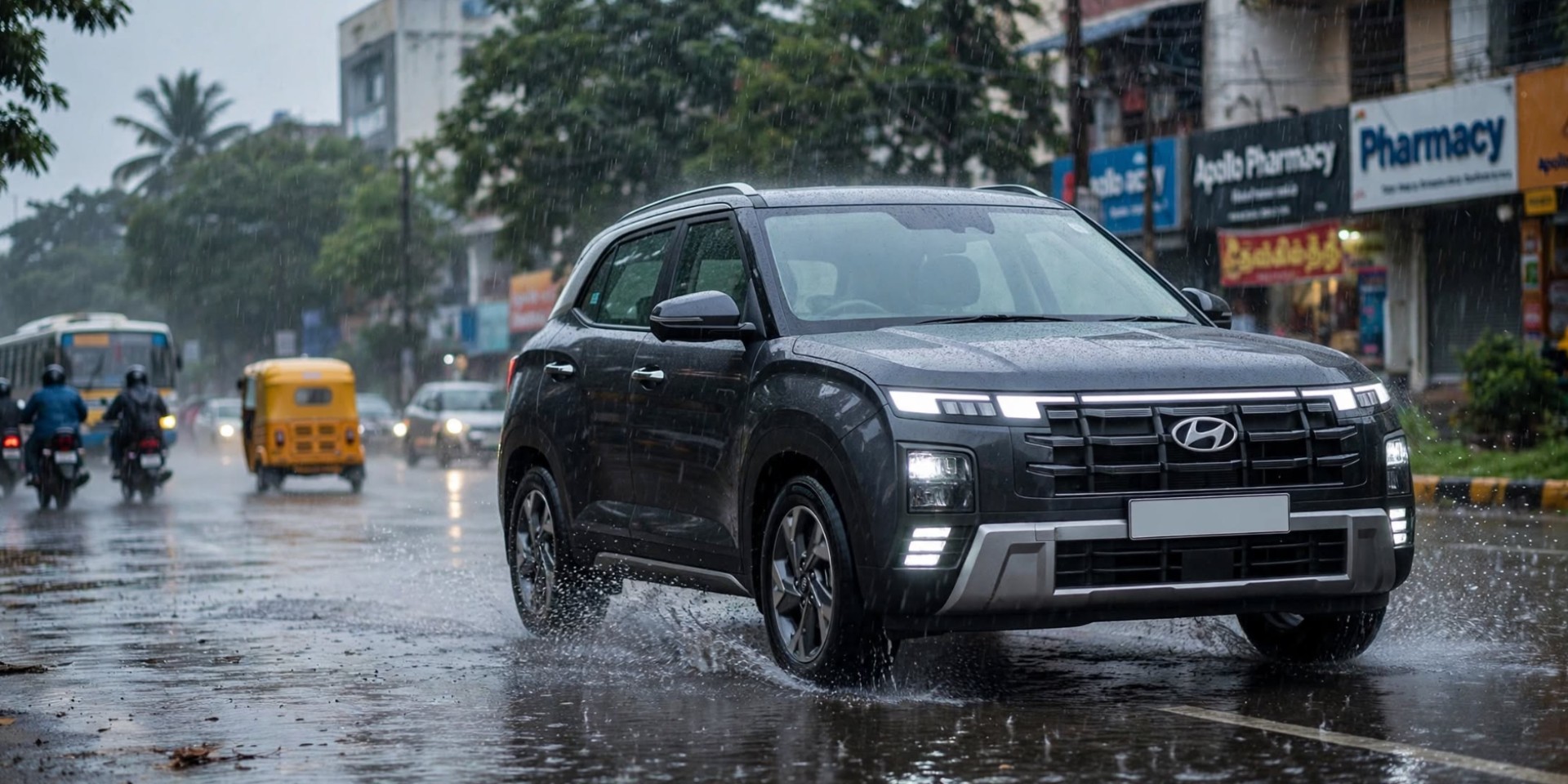
Hyundai Monsoon Car Care Tips for Chennai Drivers | Lakshmi Hyundai
Prepare your Hyundai for Chennai's monsoon with expert tips on wipers, tyres, brakes, AC, and safe wet-weather driving from Lakshmi Hyundai's service team.
hyundai-monsoon-car-care-chennai
Chennai experiences one of the most intense monsoon seasons among major Indian cities. The northeast monsoon, which typically hits between October and December, can bring several consecutive days of heavy, relentless rain that floods roads, reduces visibility, and puts enormous stress on your car's mechanical and electrical systems. For Hyundai owners in Chennai, proactive monsoon preparation is the difference between driving confidently through the rains and facing expensive repairs afterward. Lakshmi Hyundai's service team has put together this comprehensive monsoon car care guide specifically for Chennai's driving conditions.
Understanding What Chennai's Monsoon Does to Your Car
Unlike the southwest monsoon that affects Kerala and coastal Karnataka, Chennai's northeast monsoon is characterized by unpredictable, intense downpours that can dump 100 mm of rain in a matter of hours. Drainage systems in older parts of the city can be overwhelmed, leading to localized flooding on roads like Poonamallee High Road, Tambaram, and parts of Velachery.
Standing water on Chennai roads presents specific risks to cars. Engines can suffer hydrostatic lock (water entering the combustion chamber) if water is deep and the car's air intake is submerged. Electrical systems can short-circuit if water seeps into ECU housings or fuse boxes. Brake pads and discs can deteriorate faster when exposed to constant wet conditions. Rust and corrosion accelerate significantly in the humidity that accompanies monsoon in a coastal city like Chennai.
The good news is that most of these risks can be managed or eliminated with proper preparation.
Pre-Monsoon Checks - Do These Before October
Wiper Blades: The single most critical safety item for monsoon driving. If your wipers leave streaks, miss patches, or make a chattering sound even on fresh glass, replace them before the rains arrive. Lakshmi Hyundai service centers in Chennai carry genuine Hyundai wiper blades that are sized and profiled for your specific model. For a car like the Creta or Venue, expect to pay approximately Rs. 800 to Rs. 1,500 for a pair of genuine Bosch-brand blades (original equipment on many Hyundai models).
Tyre Tread Depth: Worn tyres are dangerous in wet conditions because they cannot effectively displace water from between the tyre and road surface, leading to hydroplaning at even moderate speeds. Hyundai recommends replacing tyres when tread depth falls below 2 mm. You can check tread depth quickly using a Rs. 2 coin - if the entire outer edge of the coin is visible when inserted into the tread groove, your tyres need replacement. With Chennai's monsoon and its associated fast, water-filled roads, do not delay tyre replacement.
Brakes: Wet conditions increase stopping distance. Have your brake pads, discs, and brake fluid checked before monsoon. Brake fluid absorbs moisture over time, which lowers its boiling point and can lead to brake fade in conditions where the system is working harder. If your car is due for a brake fluid flush (Hyundai recommends every 2 years or 40,000 km), do it now.
Battery: High humidity and constant use of electrical accessories (defogger, wipers, headlights, AC) in monsoon conditions can accelerate battery drain. If your battery is more than 3 years old, have its health tested. A weak battery that starts fine in dry weather may struggle in monsoon conditions when demand is higher. The battery health test is quick and free at Lakshmi Hyundai service centers.
AC System: Many Chennai drivers notice their AC performance drops during monsoon due to increased humidity loading and sometimes due to refrigerant loss that has gone unnoticed during summer. Have the AC inspected and regassed if needed before the monsoon. Also, ensure the cabin air filter is clean - a clogged filter reduces airflow and allows more moisture into the cabin.
Underbody Coating and Door Seals: For cars that spend significant time in standing water or flooded streets, applying an underbody anti-corrosion coating before monsoon is a worthwhile investment. It costs approximately Rs. 2,500 to Rs. 5,000 at Lakshmi Hyundai and provides a protective layer against rust from accumulated mud and water. Check that door and window seals are intact - even a small crack can let water into the cabin over time.
During Monsoon - Driving Tips for Chennai Conditions
Avoid Waterlogged Roads: This is the single most important monsoon driving rule. If water level on a road appears to exceed 6–8 inches, do not attempt to drive through it. Even if other vehicles are crossing, your car's air intake height and flood clearance may be different. The Hyundai Venue and Creta have good but not unlimited water wading capability. Engine hydrostatic lock is not covered by standard warranty or insurance.
Drive Slowly Through Standing Water: If you must cross a short flooded stretch, do so slowly (under 10 kmph), in first gear (or the lowest drive mode in automatic transmissions), and without stopping. Drive with one foot light on the brake to keep brake surfaces clean and warm.
Leave More Stopping Distance: On wet roads, stopping distances can be 30–50% longer than in dry conditions. Increase the gap between your car and the one ahead, and brake gently and earlier than you normally would.
Use Headlights, Not Just DRLs: Daytime running lights are not sufficient in heavy rain because they are only front-facing and may not activate your tail lights. Switch to low beam headlights, which activates tail lights and improves your visibility to vehicles behind you.
Defogger Use: Chennai's monsoon creates significant cabin fogging due to high humidity. Use your rear defogger and front AC on fresh air mode (not recirculation) to clear mist quickly. The Creta's front windshield defogger vents are particularly effective when set on high.
Post-Monsoon Care
After the monsoon season, have your Hyundai serviced with a focus on underbody inspection for rust, brake system check for pad condition and rotor surface rust, AC drain tube clearance (blockages lead to water dripping into the cabin footwell), and battery state-of-charge test.
Lakshmi Hyundai Chennai's service centers offer a post-monsoon inspection package that covers all of these items systematically.
Frequently Asked Questions
1. When should I get my Hyundai monsoon-ready in Chennai?
Ideally, complete all pre-monsoon checks - wipers, tyres, brakes, battery, AC, and underbody coating - before October, when Chennai's northeast monsoon typically begins.
2. How do I know if my tyres need replacement before monsoon?
Use a Rs. 2 coin test: insert it into the tread groove, and if the entire outer edge of the coin is visible, your tread depth has dropped below the safe limit and tyres should be replaced. Hyundai recommends replacing tyres below 2 mm tread depth.
3. How much do genuine wiper blades cost for a Creta or Venue?
A pair of genuine Bosch-brand wiper blades typically costs between Rs. 800 and Rs. 1,500, depending on the model, and is available at Lakshmi Hyundai service centers.
4. Is it safe to drive through waterlogged roads in Chennai?
No. If standing water exceeds 6–8 inches, avoid driving through it entirely, as it can cause engine hydrostatic lock - a failure not covered under standard warranty or insurance. If you must cross a short flooded stretch, do so slowly, in first gear, without stopping.
5. Why does my Hyundai's AC perform worse during monsoon?
Increased humidity puts extra load on the AC system, and refrigerant loss that went unnoticed over summer can also reduce cooling. Getting the AC inspected and regassed before monsoon, along with cleaning the cabin air filter, helps restore performance.
6. Should I get an underbody anti-corrosion coating before monsoon?
Yes, especially if your car regularly drives through standing water or flooded streets. It costs approximately Rs. 2,500 to Rs. 5,000 at Lakshmi Hyundai and helps prevent rust from accumulated mud and moisture.
Conclusion
Chennai's monsoon demands respect and preparation. By following these pre-monsoon checks, practicing safe monsoon driving habits, and booking a post-monsoon inspection at Lakshmi Hyundai, you ensure your Hyundai remains safe, reliable, and mechanically sound through the rains and beyond. Book your monsoon service today at any Lakshmi Hyundai service center in Chennai.
- hyundai-monsoon-car-care-chennai
- Understanding What Chennai's Monsoon Does to Your Car
- Pre-Monsoon Checks - Do These Before October
- During Monsoon - Driving Tips for Chennai Conditions
- Post-Monsoon Care
- Frequently Asked Questions
- 1. When should I get my Hyundai monsoon-ready in Chennai?
- 2. How do I know if my tyres need replacement before monsoon?
- 3. How much do genuine wiper blades cost for a Creta or Venue?
- 4. Is it safe to drive through waterlogged roads in Chennai?
- 5. Why does my Hyundai's AC perform worse during monsoon?
- 6. Should I get an underbody anti-corrosion coating before monsoon?
- Conclusion

31 August 2026